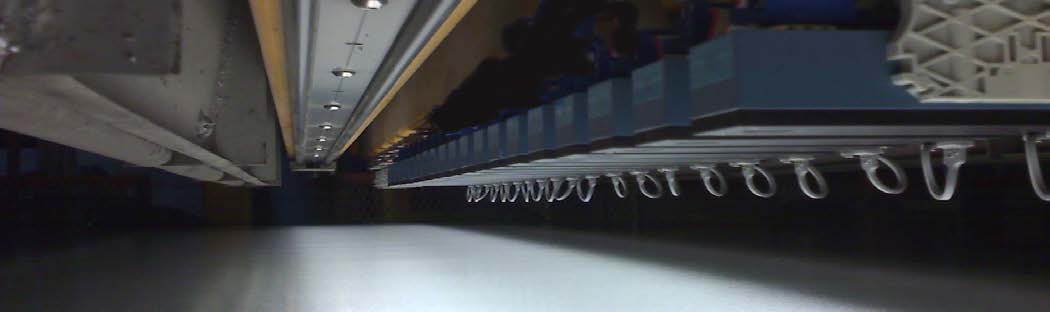
Actual DDS sensors installed across a material inspection line, from the General Vision sales sheet

“Changing the way the world computes”

Guy Paillet · 2001
Field-proven trainable edge AI

AI vision that learns where it sees.

Long before edge AI had a name, NeuroMem-powered systems were learning and recognizing patterns beside their sensors—in factories, on vessels and inside industrial equipment.

Real installation
DDS inspection line. Photograph from General Vision’s DDS sales sheet.

2010Fielded in Kingsport, Tennessee
28Autonomous vision nodes
LocalLearning and recognition
128 × 128Compact diagnostic image

ZISC / NeuroMem · Proven in the field

Beyond the hype. Decades of working silicon.

From ZISC in 1993 to NeuroMem today, the story is built on chips, deployed systems and learning in the field. Glass inspection and fish sorting show what this architecture delivers in daily operation.

Explore the history and technical presentations ↓

Case 01 · Flat glass

28 intelligent eyes across a moving glass ribbon.

The DDS installation distributed intelligence across the production line instead of moving every full-resolution image to a central computer.

Wide view of the real DDS inspection installation
Actual DDS installation, shown uncropped in the supplied sales sheet.
Kingsport, Tennessee · 2010

Each MTVS was a complete, trainable vision system.

A global-shutter CMOS sensor captured the scene. An Actel FPGA extracted information. A CM1K learned and recognized patterns locally. Each central node held its own copy of the same knowledge; the two extremity nodes used edge-specific knowledge.

The DDS Monitor software teaches examples of acceptable material so the sensors can detect departures from learned textures. Knowledge can be saved, transferred and expanded with additional examples.
01

Recognition at the sensor

Every node analyzed its own zone of the fast-moving ribbon with its own trained knowledge.

02

Information, not a video stream

The ribbon cable carried defect position, category and a small diagnostic image.

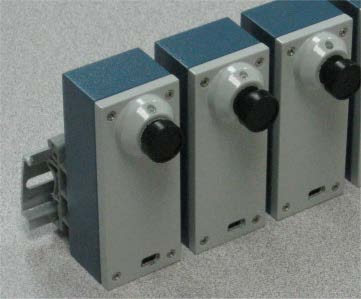
Three Miniature Trainable Vision Sensors mounted on a DIN rail
MTVS modules from the General Vision DDS sales sheet.

DDS product capabilities

Learn good material. Detect the unexpected.

2 × 2 pixelsMinimum anomaly size
<75 msFull-frame inspection

The sales sheet specifies inspection latency independent of knowledge size, with anomaly reporting taking 4 microseconds per sensor over the serial line.

Product figures from the supplied DDS sheet, identified by General Vision as the 2022 update. Its separate 50-sensor, 1.8 m example is not the 28-node Kingsport installation.

Evidence before explanation

One architecture. Different realities.

Distributed vision, operator-led learning and industrial anomaly detection each reveal a different strength of NeuroMem.

Flat glass · USA

Distributed defect detection

Twenty-eight autonomous nodes classified defects across a production ribbon and sent compact results downstream.

Fishing · Norway & Iceland

Inspection taught by the crew

CogniSight systems inspect fish before filleting. Crews teach and reinforce recognition aboard the vessel using Image Knowledge Builder.

Steel · Magnitogorsk

Machinery signal monitoring

Local neural networks recognized known waveforms and surfaced unfamiliar patterns for human review.

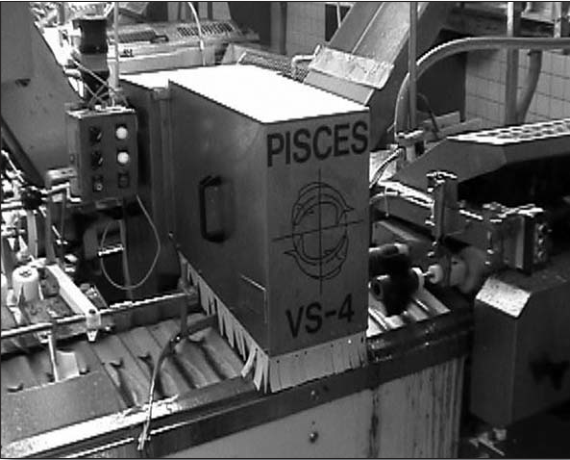
Actual Pisces VS-4 CogniSight waterproof camera enclosure mounted above the fish conveyor
The actual CogniSight camera enclosure above the pocket conveyor, before filleting. Figure 6, Menendez & Paillet, AI Magazine 29(1), 2008. © AAAI.
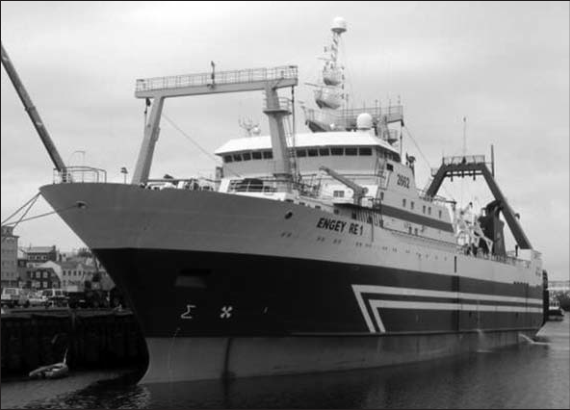
The Engey fishing vessel in Iceland
The Engey, Iceland: seven CogniSight systems reported aboard this vessel. Figure 1, Menendez & Paillet, AI Magazine 29(1), 2008. © AAAI.

Published field evidence · 2008

Trainable vision at sea. Still in service.

The 2008 AI Magazine article documented more than 30 systems on seven vessels in Norway and Iceland. Each used four ZISC neural chips—312 neurons in total—with FPGA feature extraction.

98%Reported recognition accuracy
OnboardLearning by the crew

The system checks species, damage, orientation and multiple fish in a conveyor pocket before filleting.

Historical results: Anne Menendez and Guy Paillet, “Fish Inspection System Using a Parallel Neural Network Chip and the Image Knowledge Builder Application,” AI Magazine, Spring 2008. Current status: General Vision reports that the application remains in operation since 2008; this is a separate update from the published study.

Image Knowledge Builder · IKB

Teach, inspect, validate.

A practical framework for training and validating NeuroMem image recognition, from annotated examples to reusable knowledge.

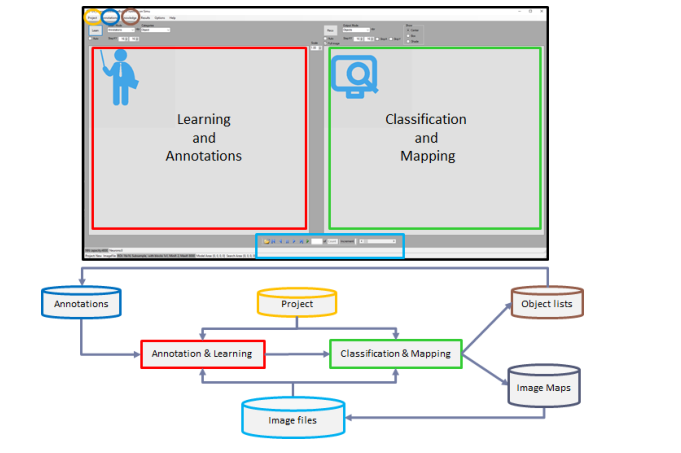
IKB interface showing learning and annotations alongside classification and mapping, connected through a shared project
Learning and validation workflow from the supplied IKB User Manual, page 5.

Make the learned knowledge visible.

Annotate objects or surfaces, choose image features and train step by step or in batches. Review recognition on subsequent images, inspect category and distance maps, and add examples where needed.

Export recognized locations and categories, then save neuron knowledge for reuse on other NeuroMem platforms. IKB supports the transition from application examples to a validated recognition system.

Capabilities described in the IKB User Manual, sections 1, 2, 5–7 and 9. Its role in crew-directed fish inspection is also documented in the 2008 article.

The enabling device

NM5500 Alfaplus: intelligence beside the sensor.

The NM5500 extends NeuroMem principles to 5,500 parallel neurons—built for deterministic recognition, local learning and compact edge systems.

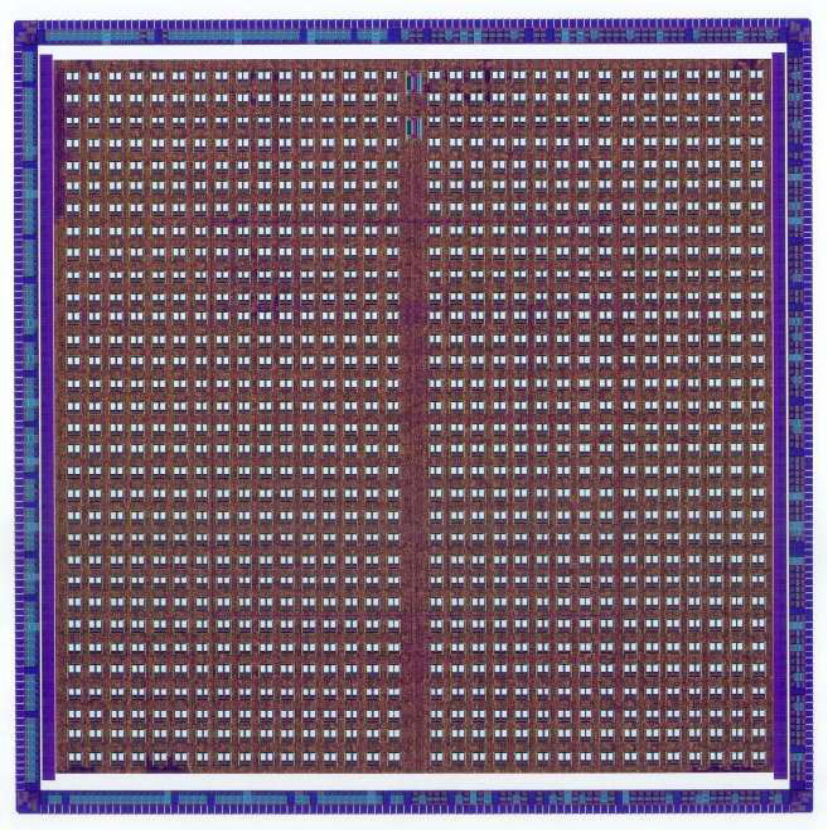
CM1K OKI silicon die with its repeated neuron array
CM1K OKI die — the predecessor, shown here in the photograph supplied by General Vision.

From CM1K to NM5500

NM5500 Alfaplus—today’s powerful evolution of the CM1K OKI.

Building on the trainable, parallel recognition architecture behind the CM1K, the NM5500 carries these principles forward for sensor-side intelligence.

Available now as AX5500 in a compact BGA package, from Alfaplus or General Vision. Additional distributors coming soon.

Parallel CMOS sensorGlobal-shutter image acquisition
FPGA logicFeature extraction close to the pixel stream
Actionable resultCategory, distance and novelty information
Recognition logic portDirect integration with sensor-side and FPGA recognition logic.
I²C interfaceCompact host control for training, recognition and neuron management.
NeuroMem busHigher-throughput integration with FPGA or processor logic.
On-device learningLearn new examples locally without a cloud retraining cycle.

The NeuroMem principle

Move the intelligence to the data—not the data to the intelligence.

Local learning and recognition reduce data movement, protect privacy and keep response time independent of a network connection.